

Mealtimes should feel calm and familiar, not rushed or worrying. Thoughtful Parkinson’s care at home pays special attention to eating and drinking, because tremor, stiffness, and slower movements can make a simple lunch take more effort. Families in Bethesda and the DC Metro area tell us that small changes — timing, seating, utensils, and pace — can help a loved one enjoy food more comfortably and keep mealtimes relaxed for everyone at the table.
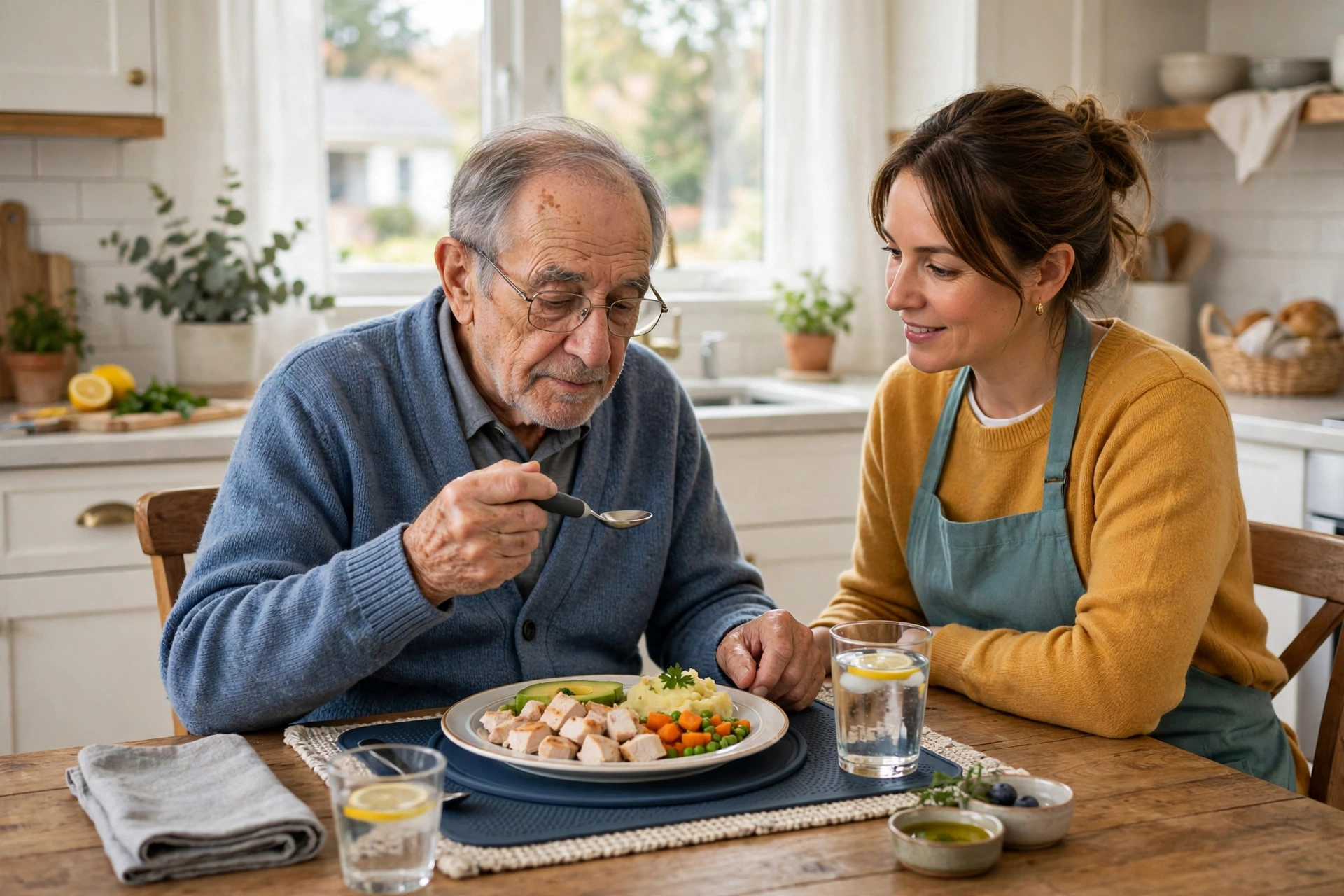
Time meals around energy and medication routines
Many people living with Parkinson’s have times of day when movement feels easier and times when it feels harder. When you can, plan main meals for the easier times, and keep the routine predictable: same place, similar times, and no rushing to finish.
- Follow your loved one’s own plan — keep meal and medication timing aligned with what their healthcare team has advised for them personally.
- Allow plenty of time — a relaxed 45 to 60 minutes is kinder than a hurried meal, and sitting down together helps.
- Serve smaller, more frequent meals — if large meals feel tiring, smaller portions more often can be easier to manage through the day.
Set up the table for steadiness and comfort
A steady setup reduces spills and frustration before the first bite. Seat your loved one in a supportive chair with feet flat on the floor, close to the table, with good light so they can see their plate clearly.
- Reduce sliding — place a non-slip mat under the plate and use a plate with a raised edge to help guide food onto a fork or spoon.
- Choose easier utensils — larger handles, weighted utensils, and cups with lids and straws can help some people; try one change at a time and keep what works.
- Keep it simple — one course at a time, few items on the table, and a calm room without the television competing for attention.
These ideas pair well with the basics in our guide to senior nutrition at home, which covers balanced, familiar meals for older adults.
Make food easier to eat, without making it feel different
The goal is food your loved one recognises and enjoys, prepared in a way that is easier to manage. Cut food into bite-size pieces before serving, offer softer textures when chewing feels tiring, and serve sauces or gravies that help food stay together on a utensil.

- Finger foods can help — for some meals, foods that are easy to pick up, like sandwich quarters or vegetable sticks with dip, preserve independence.
- Sit upright and take small bites — encourage an upright posture, small bites, and pauses between bites; never rush someone who is eating slowly.
- Watch hydration too — offer water regularly during and between meals in a cup that is easy to hold and not too full.
If you notice coughing during meals, frequent throat clearing, a wet-sounding voice after swallowing, or unexplained weight loss, raise it promptly with your loved one’s healthcare team or a speech-language professional. Those are questions for clinicians, not problems families should try to solve alone.
Protect dignity, appetite, and the pleasure of eating
Eating is social as well as physical. Let your loved one choose what they can — which meal, where to sit, tea or water first — and dress the table normally rather than making it look clinical. A wipe-clean mat and a small towel nearby handle spills quietly, without comment.
Appetite can vary from day to day. Keep favourite foods in rotation, note what went well in a simple kitchen notebook, and do not take a small appetite personally. Company helps too: a caregiver or family member eating at the same table, at the same pace, makes the meal feel like a meal again.
Key takeaway: Safer, easier mealtimes with Parkinson’s come from small, steady choices: time meals for when movement feels easier, set a stable and simple table, serve familiar food in manageable pieces, allow unhurried time, and ask your loved one’s healthcare team promptly about any coughing, swallowing difficulty, or weight loss.
Would calmer mealtimes at home help your family?
GoldenYears helps families across Bethesda, Potomac, Rockville, and the DC Metro area with Parkinson’s care at home, dementia and Alzheimer’s care, post-surgery support, and everyday companionship, with a certified CNA/GNA team. Start with a free one-hour consultation: Request your free consultation here.
This article is general information for families, not medical advice. For personal guidance about your loved one’s Parkinson’s, swallowing, nutrition, medicines, or care needs, please consult their healthcare professionals.