

Most falls at home don’t happen on ladders or rooftops. They happen on the way to the bathroom at 2 a.m., on a rug that slid, or reaching for a shoe under the bed. The good news: fall prevention at home is mostly a series of small, inexpensive fixes. Families in Bethesda and the DC Metro area ask our caregivers about this constantly, so here is the room-by-room walk-through we use — the same one you can do this weekend with a notepad and an hour.
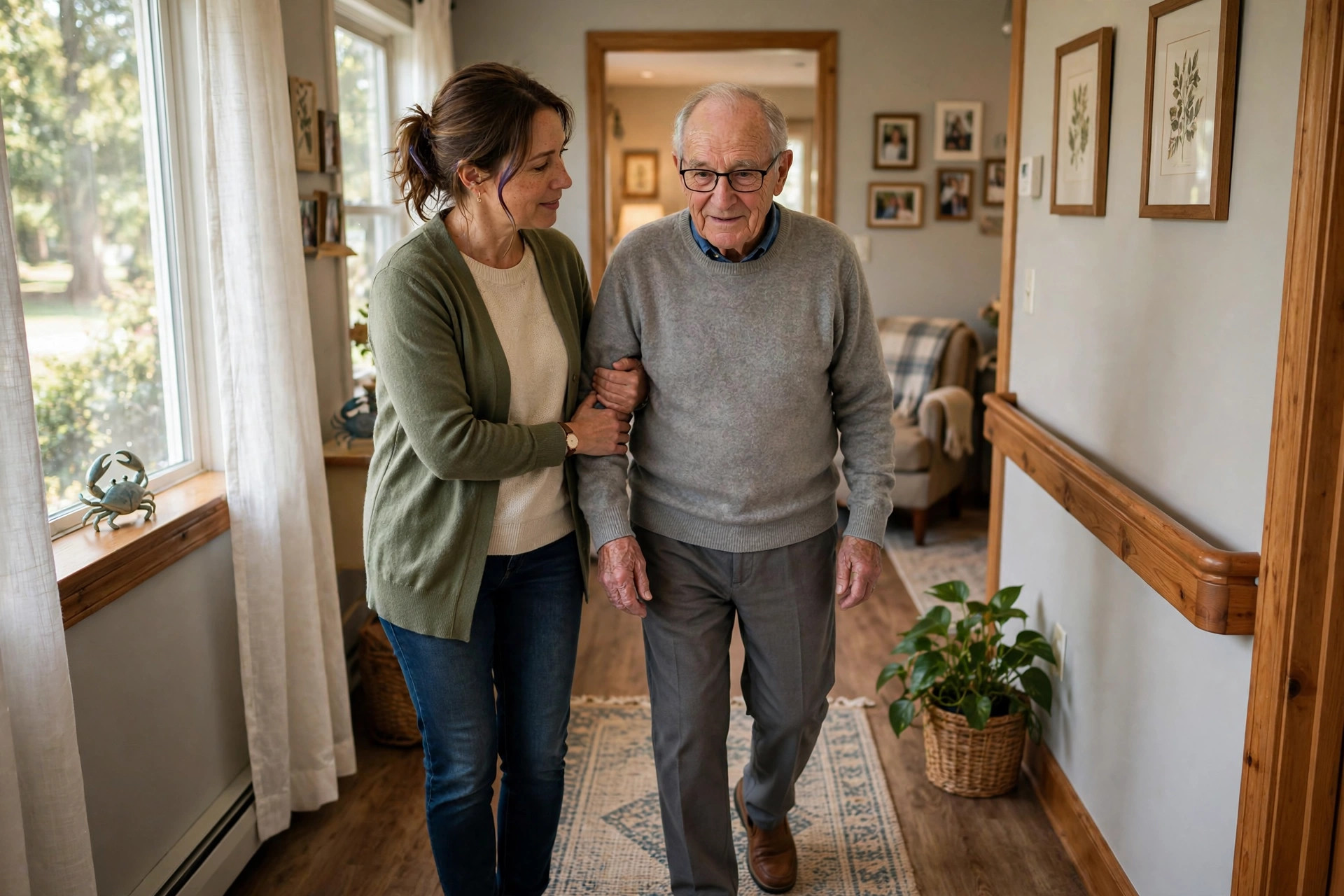
Start with light: you can’t avoid what you can’t see
Dim hallways and dark bathrooms are behind a large share of nighttime falls. Walk your loved one’s route from bed to bathroom after dark and look at it honestly.
- Add night lights along the hallway and inside the bathroom.
- Use brighter bulbs in stairwells and entryways.
- Keep a lamp or a light switch within reach of the bed — nobody should cross a dark room.
- Place flashlights where power outages would leave them stranded.
Living areas: clear the runway
The living room should work like a runway: wide, clear, and predictable. Cords crossing walkways, loose throw rugs, and low coffee-table corners are classic hazards.
- Remove throw rugs, or tape/secure their edges flat — a curled corner is a trip wire.
- Run cords along walls, never across walking paths.
- Rearrange furniture so the path from chair to kitchen to bathroom is straight and wide enough for a walker.
- Keep everyday items — remote, phone, glasses, tissues — within easy reach of the favorite chair, so there’s no stretching or climbing.
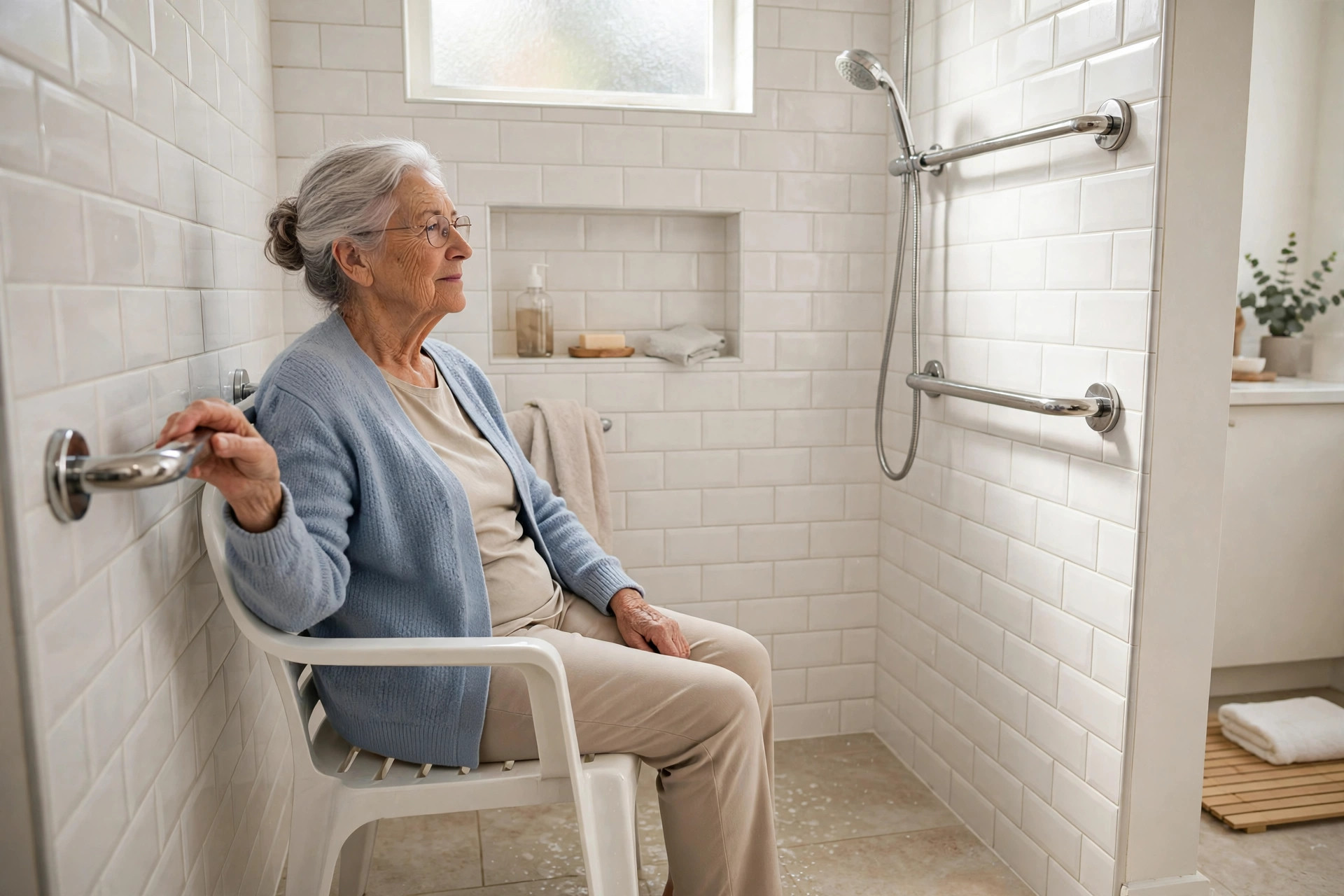
The bathroom: the highest-risk room in the house
Wet tile, low toilets, and high tub walls make the bathroom the room where most serious falls happen. It’s also the room where a few fixtures change everything.
- Grab bars by the toilet and inside the shower/tub — installed into the wall studs, never suction-cup bars as the main support.
- A shower chair and a hand-held shower head turn a risky task into a seated, safe one.
- Non-slip mats inside the tub and on the floor outside it.
- A raised toilet seat or safety rails if standing up from the toilet has become a struggle.
Stairs and entryways: slow the transitions
Stairs demand respect, and so do the moments of arriving and leaving — carrying groceries, rushing for the doorbell.
- Handrails on both sides of the stairs, firmly anchored.
- A strip of contrasting tape or paint on the edge of each step makes depth easier to judge.
- Keep stairs completely clear — nothing stored “temporarily” on a step.
- A sturdy chair or bench by the front door for putting on shoes while seated.
- Good shoes matter: firm, low-heeled, closed-back — socks and loose slippers slide.
Habits that quietly prevent falls
The safest home still depends on a few daily habits. Encourage your loved one to sit up slowly, pause at the edge of the bed, and stand for a moment before walking — dizziness often passes in those ten seconds. Keep a phone or a wearable alert button within reach at all times. And review medications with their doctor or pharmacist: some prescriptions and combinations increase dizziness, and that’s a conversation worth having at every appointment. If a fall does happen — even without injury — mention it to the doctor; it’s important medical information, not a confession. Many of these same steps also make the home safer during recovery — our guide to helping a loved one recover after surgery walks through that season in more detail.
Key takeaway: Fall prevention isn’t one big renovation. It’s twenty small fixes — light, clear paths, grab bars, good shoes, slow transitions — each one removing a chance for the day to go wrong.
Want a second pair of eyes on your loved one’s home?
GoldenYears caregivers walk homes with families every week, and we notice things even careful families miss. Start with a free one-hour consultation: we visit the home, talk through the daily routine, and point out the risks we see — and how our CNA/GNA-certified caregivers can help, from a few hours a week to daily support. Request your free visit here.
This article is general information for families, not medical advice. For medical questions — including medication reviews and mobility assessments — always consult your loved one’s healthcare professionals.