
After Surgery: Helping Your Loved One Recover Safely at Home
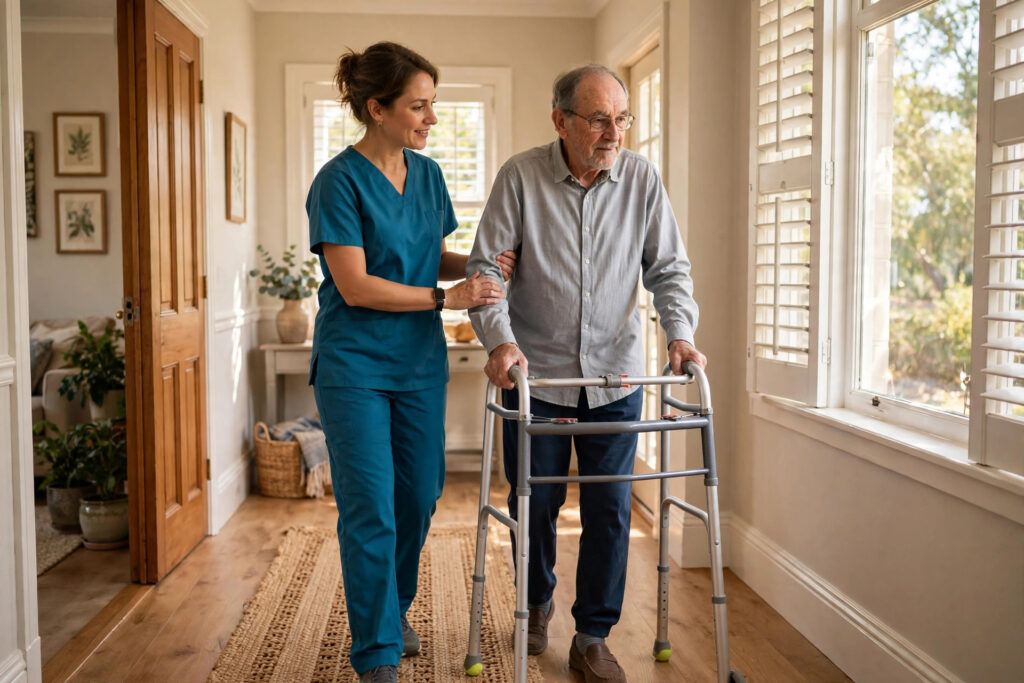
The surgery went well — now comes the part nobody prepares families for: the first two weeks at home. Recovery at home is usually better for seniors (familiar bed, familiar food, family nearby), but only when the home is ready and someone is watching the details. Here’s your guide. Before discharge day: prepare the home Clear the paths: move cords, loose rugs, and clutter from the route between bed, bathroom, and kitchen. Set up a recovery station: water, tissues, phone charger, TV remote, and prescribed items within arm’s reach of the bed or favorite chair. Bathroom safety: a shower chair and grab bars (or sturdy support) make the riskiest room much safer. Meals ready: a few easy, gentle meals prepared in advance save everyone’s energy. The first week: slow is fast Short, frequent walks inside the home — as the medical team recommends — help circulation and confidence. Help your loved one get up slowly (sit first, then stand), and be nearby for every bathroom trip, day and night. Rest is not laziness now; it’s the treatment. Keep medications simple and visible Use a pill organizer or a simple written schedule, and keep a list of all medications where any family member or caregiver can see it. Take medications exactly as prescribed, and write down anything unusual — dizziness, nausea, confusion — to report to the medical team. Know the warning signs Call the medical team promptly — or seek urgent care — if you notice: fever, increasing redness or drainage at the wound, sudden swelling or calf pain, chest pain or trouble breathing, confusion that is new or worsening, or pain that prescribed medication doesn’t control. When in doubt, always call. Nobody will ever criticize a family for asking. Protect the caregiver — that’s you Night-time help, lifting, and constant vigilance exhaust family members quickly. Rotate duties if you can, sleep when your loved one sleeps, and consider professional help for the hours nobody in the family can cover — especially overnight. Key takeaway: Good recovery is mostly small things done consistently: safe paths, short walks, medications on time, water within reach, and someone attentive nearby. GoldenYears can be there for the recovery weeks Our CNA/GNA-certified caregivers support families after surgery — mobility help, daily routines, companionship, and a watchful eye — starting with a free one-hour consultation at your home. Request your free visit here. This article is general guidance for families and does not replace the instructions of your loved one’s surgical or medical team. Always follow their discharge instructions first, and contact them with any concern about recovery.
Caring for a Parent with Dementia: A Calm-Home Guide for Families

A dementia diagnosis changes a family forever — but it doesn’t end the good days. With the right approach, home can remain a calm, familiar, loving place for a very long time. Here is what experienced caregivers wish every family knew at the beginning. Keep routines simple — and the same People living with dementia feel safest when the day has a predictable shape: wake, wash, breakfast, a walk, rest, at familiar times. Big surprises and busy, noisy environments can cause anxiety. Small, steady routines are a form of kindness. Communicate in short, warm sentences Speak slowly, one idea at a time: “Let’s have some tea,” works better than a long explanation. Offer simple choices — “the blue sweater or the green one?” — instead of open questions. Never argue about facts. If Mom insists she’s waiting for her husband who passed years ago, gently join her feeling: “You miss him. Tell me about him.” A smile and a gentle touch often say more than words. Make the home safer without making it strange Improve lighting, especially in hallways and bathrooms. Remove tripping hazards: loose rugs, cords, clutter on stairs. Keep important things — glasses, photos, a favorite blanket — in the same familiar places. Label drawers with simple pictures if that helps your loved one stay independent. Use memories as medicine Long-term memories often stay vivid when recent ones fade. Old photos, favorite music from their youth, familiar recipes — these reach your loved one in a way new information can’t. Build a little time for them into every day. Watch for the basics Confusion often gets worse when something simple is wrong: dehydration, poor sleep, a missed meal, or discomfort they can’t explain. Before assuming the condition is progressing, check the basics — and keep regular medical appointments. Sudden changes in behavior should always be discussed promptly with their doctor. Accept help before you’re exhausted Family caregivers for dementia patients have one of the hardest jobs in the world — and the highest burnout. Respite care, even a few hours a week, protects your health and your relationship with your loved one. Asking for help is not a failure. It’s how families last. Key takeaway: Your loved one may forget moments — but they feel your patience, your tone, and your love in every single one. Calm, routine, and kindness are the care. You don’t have to do this alone GoldenYears caregivers are trained and certified (CNA/GNA) in dementia and Alzheimer’s care. Start with a free one-hour consultation — we’ll visit your home, meet your loved one, and talk honestly about what support would look like. Request your free visit here. This article shares general caregiving guidance for families. It is not medical advice and doesn’t replace your loved one’s doctors — always consult their healthcare team about their specific condition.
How a Caregiver Helps Your Loved One at Home: 6 Things Families Don’t Realize

When a loved one starts needing help at home, most families ask the same question: what does a caregiver actually do all day? The answer is more than most people expect — and it’s exactly why the right support can change a senior’s quality of life, and a whole family’s peace of mind. 1. Help with the everyday things that keep life normal Bathing, dressing, grooming, preparing meals, light housekeeping, getting safely from the bed to a favorite chair — these are called activities of daily living, and they’re the foundation of dignified care. A good caregiver helps with just as much as needed, and no more, so your loved one keeps their independence and confidence. 2. Safety, every hour of the day Most serious accidents at home happen during ordinary moments: a shower, a staircase, a rug’s edge. Caregivers are trained to spot risks, support mobility, and keep the home environment safe — and to notice small changes, like a new unsteadiness or a skipped meal, before they become big problems. 3. Companionship that protects the mind Loneliness is a real health risk for seniors. Conversation, a walk together, looking through family photos, a shared cup of tea — companionship keeps minds active and spirits up. Families often tell us the laughter comes back first. 4. Routine and calm for memory conditions For seniors living with dementia or Alzheimer’s, predictable routines reduce anxiety. Caregivers trained in memory care keep days structured and familiar, communicate with patience, and gently redirect difficult moments instead of confronting them. 5. A bridge between your family and your loved one’s care A caregiver sees your loved one every day — appetite, mood, mobility, sleep. That daily knowledge gets shared with the family, so nothing important goes unnoticed and everyone can make decisions with real information. 6. Rest for the family, too Many family members become caregivers by default — and burn out quietly. Bringing in professional help isn’t giving up; it’s making sure you can be a son, a daughter, or a spouse again, while a trained professional handles the care tasks. Key takeaway: A caregiver doesn’t replace the family. A caregiver supports the whole family — so your loved one is safe, comfortable, and never alone, and you can breathe again. See it for yourself — free GoldenYears offers a free one-hour consultation: we visit your loved one’s home, listen to your family’s situation, and explain honestly how we can help. No obligation, no pressure. Request your free visit here. This article is general information for families, not medical advice. For medical questions, always consult your loved one’s healthcare professionals.