

The house can be tidy, the meals on time, and the medications perfectly organized — and your loved one can still feel quietly lonely. Good companionship for seniors is not a luxury extra; it is a core part of staying well at home. Families in Bethesda and the DC Metro area tell us that when regular company returned to their loved one’s week, so did appetite, conversation, and interest in the day ahead.

Why loneliness hurts more than families expect
Loneliness often grows slowly. A spouse passes away, friends move or stop driving, adult children live busy lives elsewhere, and a once-full calendar empties. For a loved one living with dementia, Alzheimer’s, or Parkinson’s, getting out becomes harder still, and the world can shrink to a few rooms.
Families often notice the effects before they name the cause: less interest in food, more television, disrupted sleep, low mood, or repeating the same worries. No single visit fixes that pattern. What helps is steady, familiar company — someone who knows their stories and how they like their tea.
Small moments of connection that add up
Companionship does not require big outings or a packed schedule. The moments that lift mood most are usually small, regular, and personal:
- Unhurried conversation — talking about the news, the garden, old neighbors, or a favorite team, and truly listening to the answers.
- Sharing a routine task — folding laundry together, sorting photos, watering plants, or preparing a simple snack side by side.
- A daily rhythm of contact — a morning check-in, a short afternoon walk, or a regular phone or video call with family at the same time each day.
- Being remembered — asking about a grandchild by name or a story they love to tell. Feeling known is the heart of companionship.
Consistency matters more than duration. A familiar face three times a week will usually do more for mood and confidence than one long, tiring visit once a month.
Activities that spark conversation and joy
The best activities match who your loved one has always been — not just what they can still do. Start from their history, then adapt the pace.
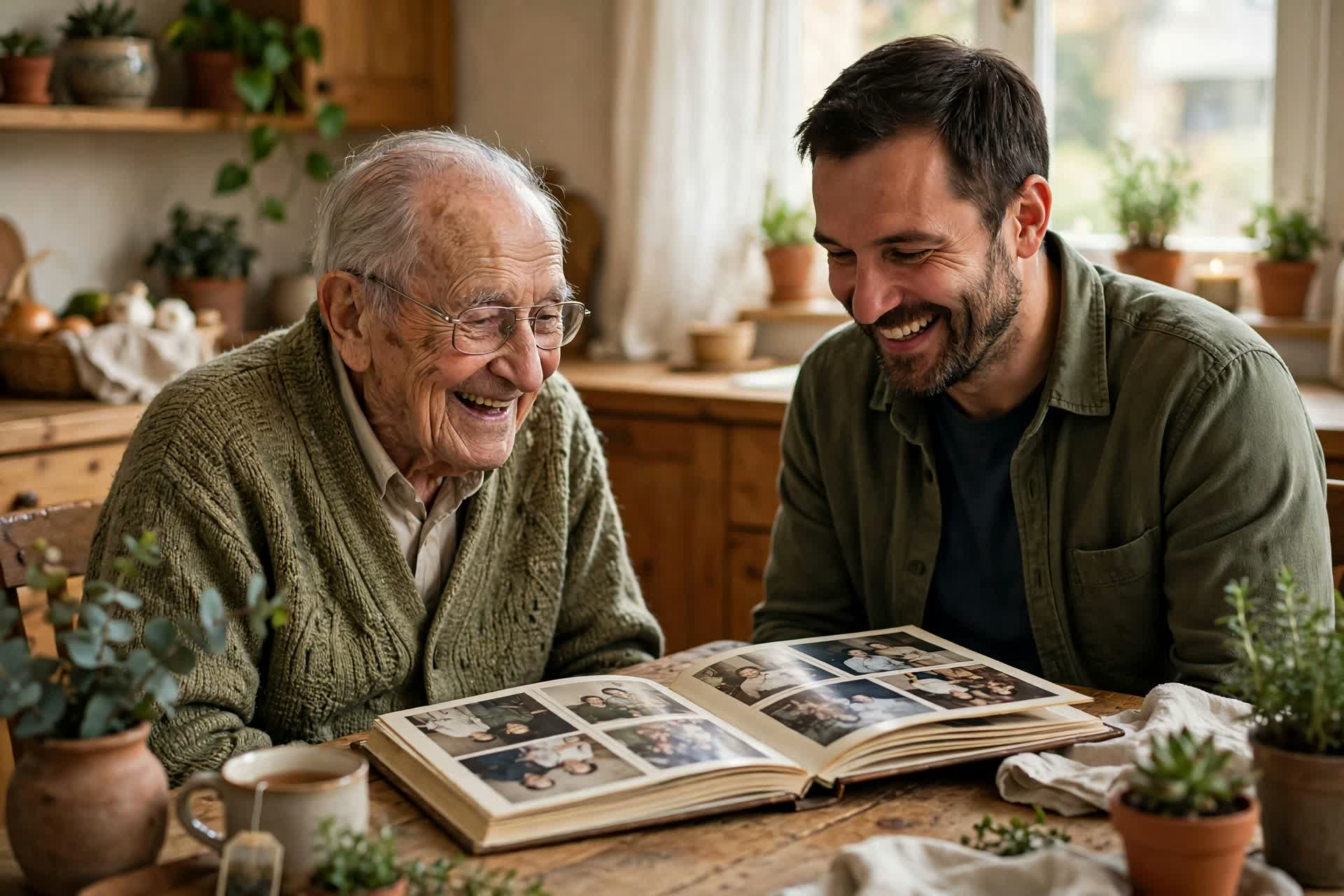
- Reminiscing: photo albums, familiar music from their younger years, or a drive past a meaningful place can unlock stories and smiles, especially for loved ones with dementia or Alzheimer’s.
- Gentle movement together: a walk around the block, light stretching, or gardening gives conversation a natural, relaxed setting.
- Hands busy, mind engaged: puzzles, cards, simple cooking, knitting, or sorting a collection keeps the day feeling purposeful.
- Getting out safely: a coffee nearby, a library visit, or sitting in a park — with support for mobility, the outing itself becomes something to look forward to.
- Staying connected to family: help with phone calls, video chats, cards, and photos so distance does not become silence.
When family cannot be there every day
Most families we meet are doing their best across impossible schedules — jobs, children, commutes, and their own health to protect. Feeling guilty does not create more hours in the day. This is the same pressure we wrote about in our guide to family caregiver burnout and respite that helps: sharing the care is not stepping back, it is making the care sustainable.
Regular companionship visits can hold the middle of the day — conversation, a shared meal, a walk, help with errands — so family time can be family time again, not only tasks.
How a caregiver provides real companionship
A good caregiver is matched for personality as well as skills. At GoldenYears, companionship means the same trusted person arriving on a steady schedule, learning your loved one’s routines and stories, encouraging activities they enjoy, and noticing changes in mood, appetite, or sleep to share with the family. It sits alongside practical help — meals, light housekeeping, transportation, and personal care — as part of everyday support you can see in our home care services overview.
Key takeaway: Companionship for seniors works through small, steady moments — familiar conversation, shared activities, and a regular rhythm of contact — that protect mood, appetite, and confidence far better than occasional big efforts.
Could regular company brighten your loved one’s week?
GoldenYears caregivers support families in Bethesda, Potomac, Rockville, and across the DC Metro area with warm, consistent companionship for loved ones living with dementia, Alzheimer’s, or Parkinson’s, or recovering after surgery. Start with a free one-hour consultation: we visit the home, listen to how your loved one’s days actually feel, and talk honestly about what support would help. Request your free consultation here.
This article is general information for families, not medical advice. Persistent low mood, withdrawal, or changes in appetite and sleep can have medical causes, so please consult your loved one’s healthcare professionals for personal guidance about their health and care.