

If you are caring for a parent or spouse at home, you may know the feeling well: you love them deeply, and you are also exhausted in a way sleep alone does not fix. That is often what family caregiver burnout looks like — not a failure of love, but a sign that one person has been carrying too much for too long. Families in Bethesda and the DC Metro area tell us it builds slowly — missed rest, skipped appointments of your own, and days with no pause at all.
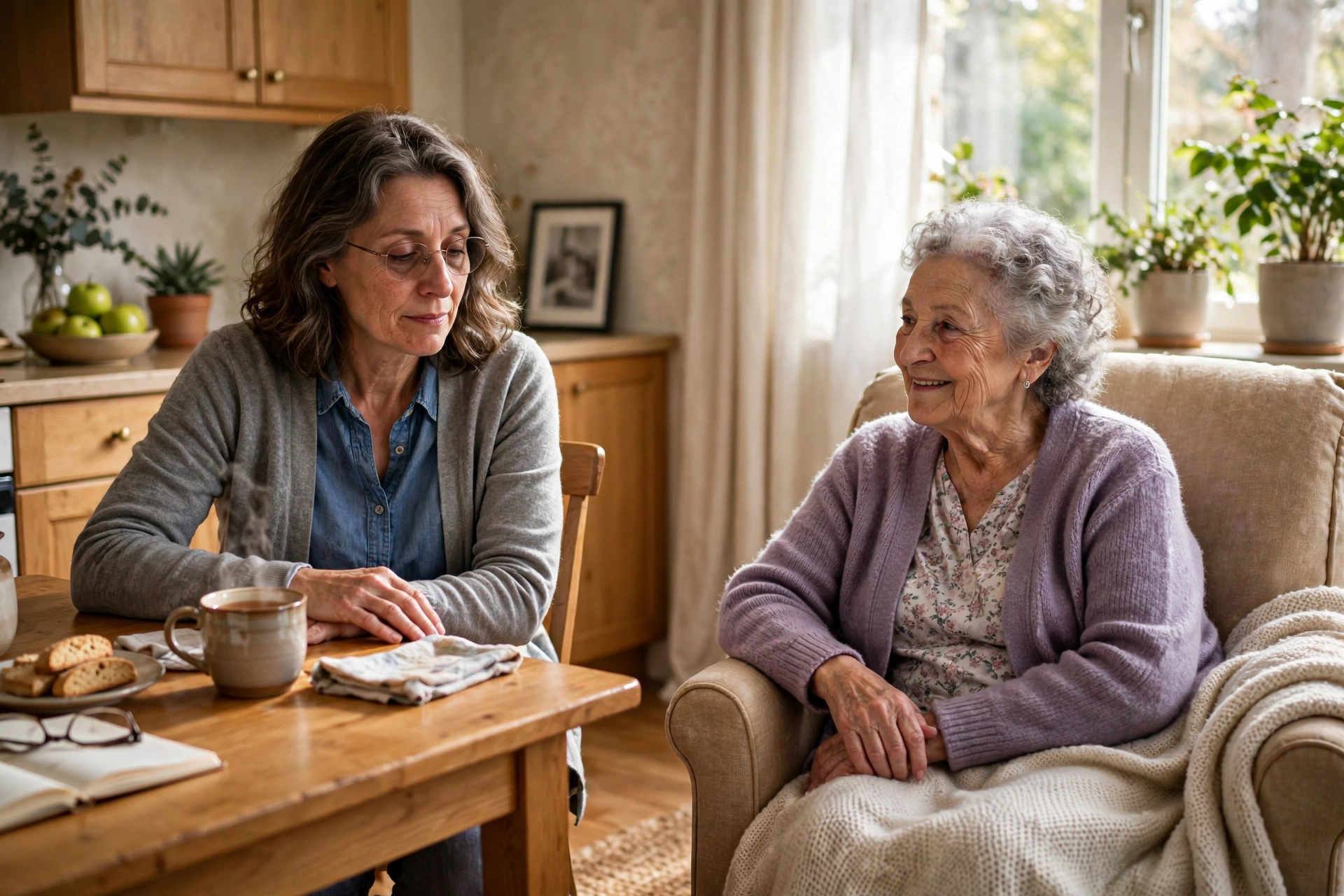
Recognize the early signs of burnout
Burnout tends to grow quietly. Naming it early makes it easier to change course before you become ill, resentful, or unable to keep caring safely.
- You feel tired most days, even after a night’s sleep, and small tasks feel overwhelming.
- You have stopped seeing friends, exercising, or keeping your own medical and dental appointments.
- You feel irritable, tearful, or numb — snapping at your loved one, then feeling guilty afterward.
- You feel trapped by the role, with no regular time that is truly your own.
If several of these sound familiar, treat that as useful information, not a personal shortcoming. It means the current plan needs more support built into it.
Make small daily pauses non-negotiable
Short, protected pauses taken every day help prevent the deep exhaustion that builds when care never stops.
- Schedule two short breaks into the day, just as you would a medication time, and protect them.
- Step outside for fresh air, a short walk, or a quiet cup of tea without your phone.
- Ask a relative to cover one specific, regular slot each week — a named time is easier for others to keep than a vague offer to “help sometime.”
These pauses work best inside a steady daily rhythm for your loved one, too. A predictable routine, like the one described in our guide to Alzheimer’s care at home, can make it easier and safer for someone else to step in for a few hours.

What respite care actually looks like
Respite means a trusted person takes over for a while so you can rest, run errands, work, or be with the rest of your family. It can be a few hours a week, a full day, or regular overnight support.
- Companionship and supervision: conversation, walks, and a watchful presence so your loved one is not alone.
- Everyday help: meal preparation, light housekeeping, laundry, and gentle reminders.
- Personal care support: help with bathing, dressing, and moving safely around the home, within the caregiver’s scope.
- A familiar face: the same caregiver visiting regularly, so your loved one builds trust and you can truly relax while you are away.
Many families start small — one afternoon a week — and adjust once they see how much difference a real break makes. You can see the kinds of support available on our home care services overview.
Talk with family and share the load
One person quietly doing everything is the fastest path to burnout. A short, honest family conversation, held before a crisis, can spread the work more fairly.
- Make a simple list of the weekly tasks: meals, rides, bills, laundry, overnight checks, and appointments.
- Ask each family member to own specific tasks — relatives farther away can help by phone, scheduling, or paperwork.
- Write the plan down and review it monthly — needs change, and the plan should change with them.
Care for your own health, without guilt
Your health is part of your loved one’s care plan. When you collapse, their care collapses with you. Guilt is common among family caregivers, but resting is not selfish — it is how you stay able to care with patience and kindness.
Keep your own check-ups, tell your doctor you are a caregiver, and talk to a healthcare professional promptly if low mood, anxiety, or exhaustion does not lift. Caregiver support groups can also help ease the isolation that feeds burnout.
Key takeaway: Family caregiver burnout is a signal that the care plan needs more hands, not that you need to try harder. Small daily pauses, shared family tasks, and regular respite protect both you and your loved one.
Could a few hours of respite help your family this week?
GoldenYears caregivers give family caregivers in Bethesda, Potomac, Rockville, and across the DC Metro area real time back — with companionship, everyday help, and steady support for loved ones living with dementia, Alzheimer’s, or Parkinson’s, or recovering after surgery. Start with a free one-hour consultation: we visit the home, listen to how your days actually go, and talk honestly about what relief would look like for your family. Request your free consultation here.
This article is general information for families, not medical advice. If you are experiencing persistent exhaustion, low mood, or health concerns related to caregiving, please consult your own healthcare professionals for personal guidance and support.